※ This page contains promotional (affiliate) links.
This article was translated and adapted from the original Japanese with the help of AI. We’ve aimed for natural, accurate English, but rules and customs can change. Please confirm the latest details on the official websites before you go.
※ This article introduces general etiquette. Views can differ depending on religion, region, and cultural background. Please use it as a helpful reference for enjoying your trip to Japan.
On a first trip to Japan, there are bound to be moments at theme parks, on trains, or around town where you wonder, “What’s the right thing to do here?” Japan has some of its own manners and customs that, once you know them, help both you and the people around you feel at ease.
That said, there’s no need to overthink it. Once you’ve got the key points down, you can relax and enjoy theme parks like Tokyo Disney and USJ, as well as the trains in between. This guide is handy whether you’re visiting Japan yourself or showing a guest from abroad around.
Here’s what this guide covers:
- Manners worth knowing at theme parks (Tokyo Disney, USJ, LEGOLAND)
- How to behave on trains and public transport to and from the parks
- Japanese rules that can catch you off guard around town (trash, smoking, tipping)
- Fun-to-know Japanese culture and customs
Let’s start with the points worth knowing at the theme parks.
Japanese manners worth knowing at the theme parks
Japan’s theme parks have some rules that differ a little from parks in other countries. Let’s compare the points most likely to differ across three major parks.
※ The following is an overview based on each park’s official rules on permitted/prohibited items as published as of May 2026. Rules may change for events or safety reasons, so please check each official site for the latest information before you visit.
| Item | Tokyo Disney Resort | USJ | LEGOLAND Japan |
|---|---|---|---|
| Selfie sticks | OK to hold a palm-sized one (folded) in one hand; extending it for use is not allowed | Only palm-sized ones (held in one hand, not raised overhead); extendable types are not allowed | Palm-sized ones may be brought in, but can’t be used where there’s a safety concern, such as while riding attractions |
| Tripods & monopods | Not allowed | Not allowed | Not allowed to bring in |
| Bringing food & drink | Can’t be eaten inside the park (you may carry it through; eat outside the park) | No bottles or cans; PET bottles, water bottles, and baby food are OK | No bento, snacks, bottles or cans; baby food and water bottles (about 500 ml) are OK |
| Smoking | Designated smoking areas only | Designated smoking areas only | Designated smoking areas only |
| Bag checks | Yes, on entry | Yes, on entry | Yes, on entry |
The finer rules differ by park and can be updated. For the latest, please check the Tokyo Disney Resort official site, USJ official site, and LEGOLAND Japan official site (all as of May 2026).
Join the back of the line
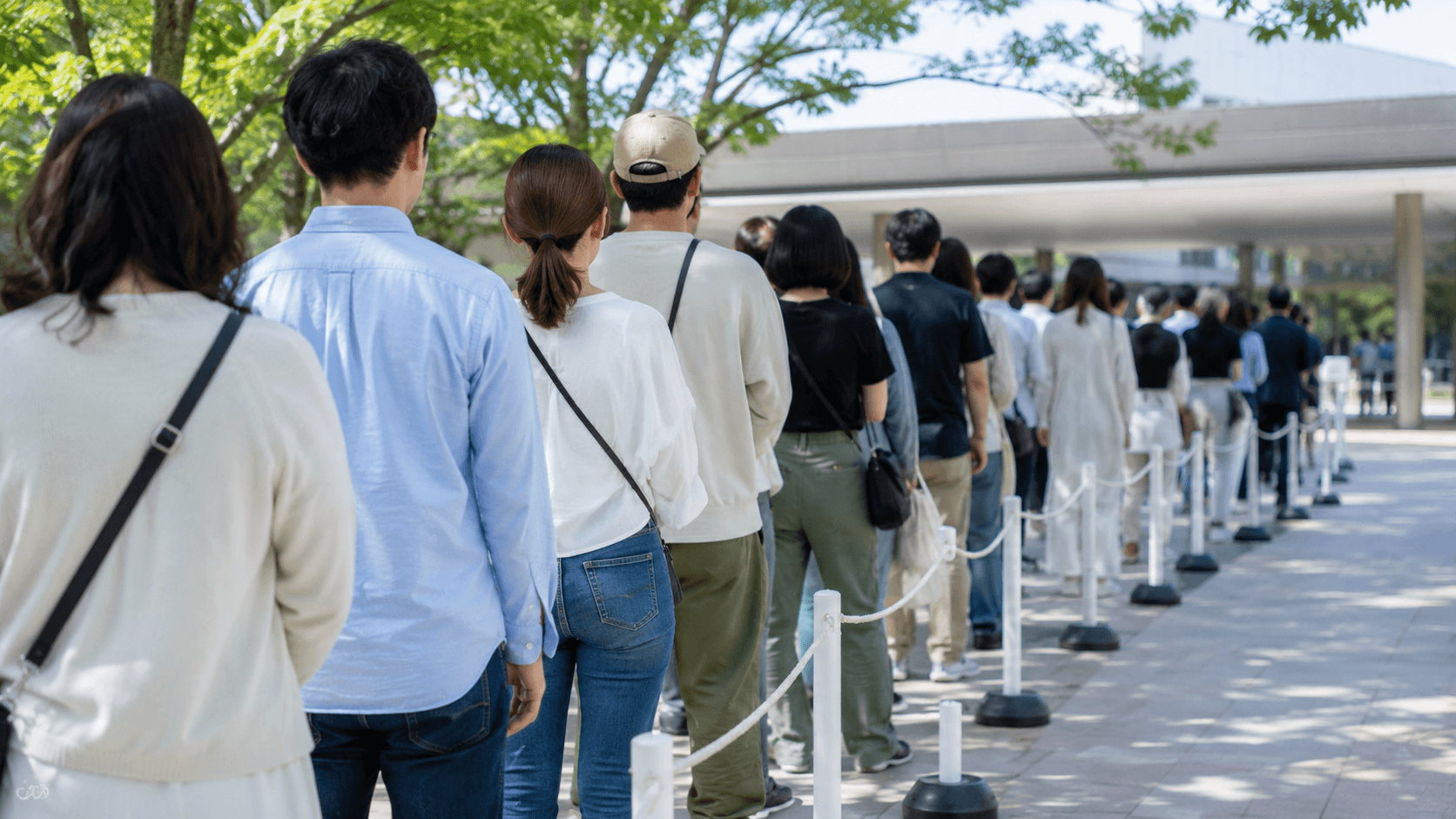
Join the back of the line
At popular attractions, restaurants, and shop registers, lining up in a single file is the norm. Join the back of the line and wait your turn. If you’re not sure where the end of the line is, it’s reassuring to ask a nearby staff member so you don’t accidentally cut in.
SPONSORED
Klook
If you’d rather skip the lines or same-day ticket windows, booking tickets in advance makes things smoother—you can enter straight away with the QR code on your phone.
Be considerate with photos and video
When you’re enjoying taking photos, don’t forget to be mindful of other guests walking by and of people appearing in your shots. Note that some attractions and shows restrict filming for safety reasons—follow the staff’s guidance and any posted signs.
Spots for shows and parades
At viewing spots for parades and shows, sharing space so everyone can enjoy themselves is valued. Whether picnic sheets are allowed and the rules for viewing areas differ by park and by performance, so follow the guidance on the day.
Manners on trains and public transport
The trains and buses you’ll use to reach the parks come with a few manners worth knowing. The Japan National Tourism Organization (JNTO) also offers guidance on points like these (JNTO: Japanese Manners, as of May 2026).
- Keep phone calls to a minimum: On Japanese trains, it’s generally best to avoid talking on the phone. Many people set their phone to silent mode and, if a call comes in, answer briefly and move to the vestibule or platform—quiet is valued on board. Some railways recommend turning your phone off near priority seats. If you must take an urgent call, keep it short and quiet, and move to the vestibule on the Shinkansen.
- Line up before boarding; let people off first: Line up to the side of the doors on the platform, and board after those getting off have stepped out.
- Priority seats: Offer your seat to elderly people, pregnant passengers, people with disabilities, and those with small children.
- Keep it quiet: Go easy on loud conversation. When it’s crowded, holding your backpack in front of you saves space.
There’s a well-known custom of leaving one side of the escalator open, though which side varies by region (in Tokyo people stand on the left, in Osaka on the right). In recent years, for safety, railways and others have been encouraging people to “stand on both sides and hold the handrail rather than walk.” There’s no problem with simply standing still rather than forcing your way up.
SPONSORED
Airalo (eSIM)
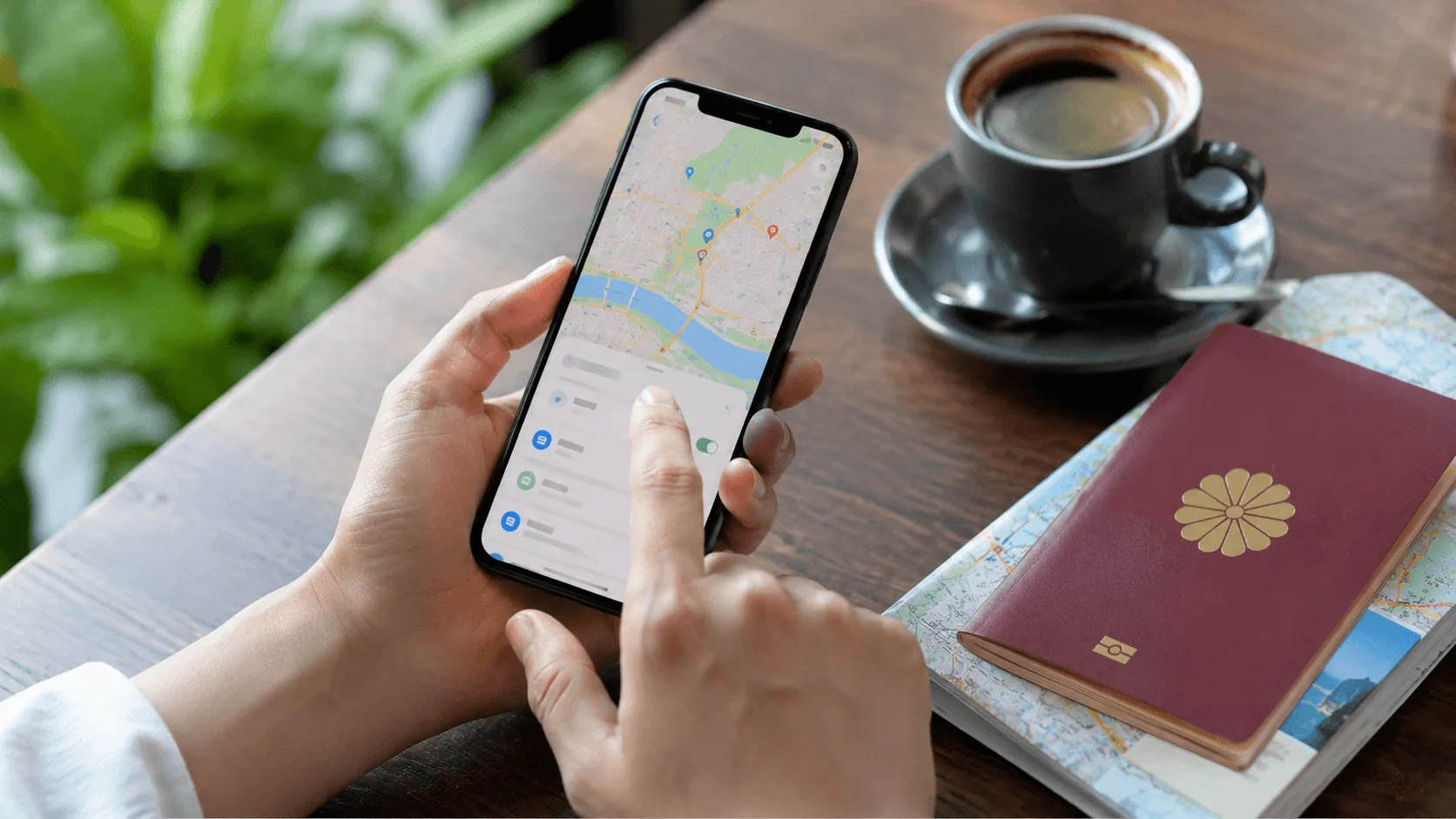
An internet connection is handy for transfers and route searches on trains and buses. With an eSIM you can use your phone as soon as you land—no swapping physical SIM cards.
Japanese rules that can catch you off guard around town
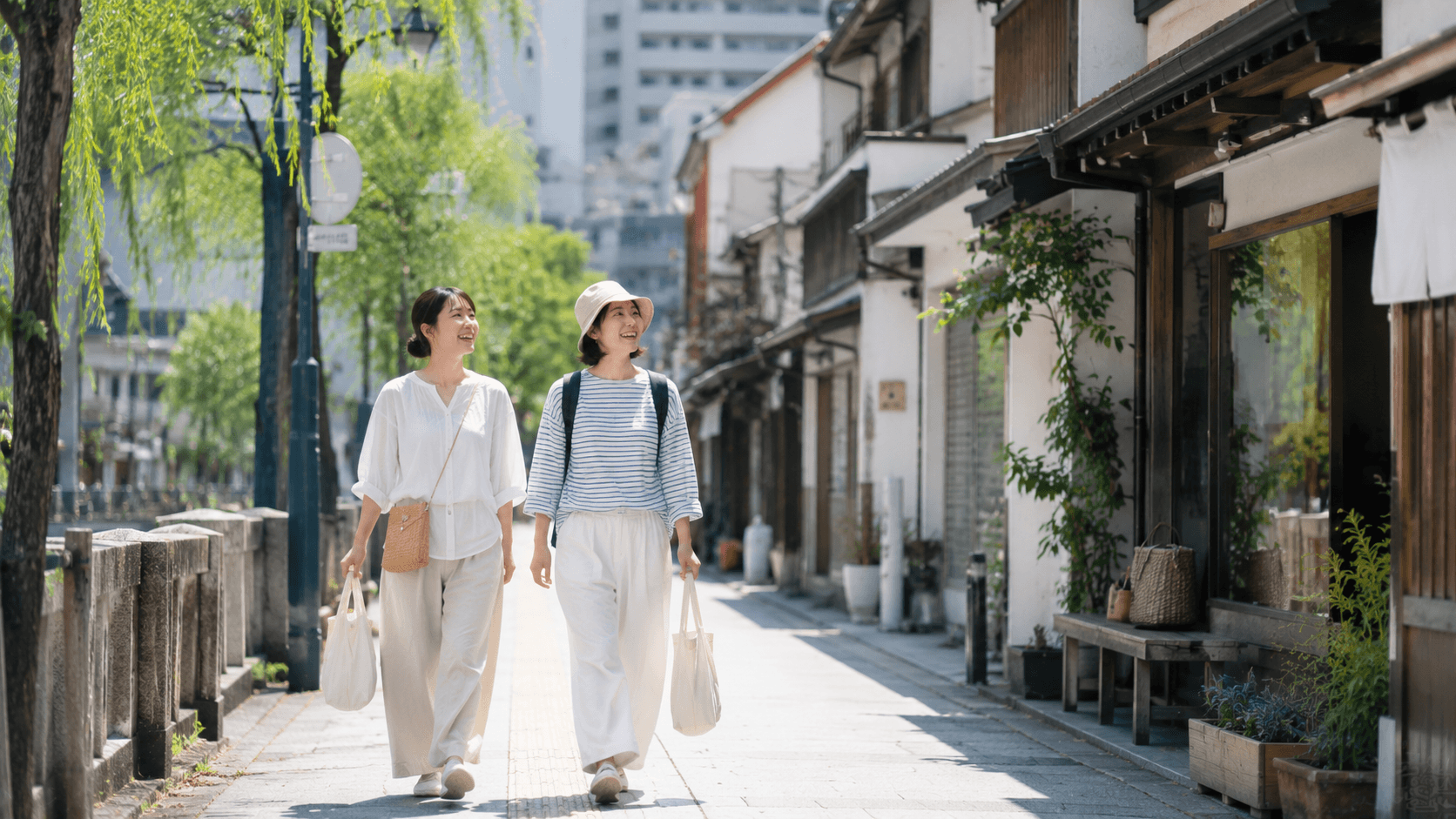
Taking your trash with you is the norm
Taking your trash with you is the norm
Japan has few public trash cans on the streets, and locals are in the habit of carrying their trash home. In the Japan Tourism Agency’s ongoing survey, “the shortage of trash cans” ranks high among the things visitors to Japan find inconvenient (Japan Tourism Agency reception-environment survey, FY2024). It’s reassuring to carry a small trash bag and dispose of your trash—sorted into “burnable trash, cans, PET bottles”—at your accommodation or at a bin in a shop where you bought something. Note that convenience store bins are meant for trash from items bought there, and some stores don’t accept outside trash, so follow each store’s rules.
Smoke only in designated places
Under the amended Health Promotion Act, fully enforced in 2020, most indoor spaces—restaurants, accommodations, offices—are non-smoking by default (except for smoking rooms that meet the standards). Many municipalities also designate areas where street smoking is banned, and smoking while walking or littering cigarette butts can be subject to fines. Please smoke only in designated smoking areas (Government of Japan Public Relations Online, as of May 2026).
Tipping isn’t necessary
Japan doesn’t have a tipping custom. There’s no need to tip at restaurants, hotels, or in taxis, and JNTO also notes that “tipping is not customary” (JNTO: Tipping in Japan, as of May 2026). At higher-end establishments, a service charge may be included in the bill.
Dining manners
Saying itadakimasu before a meal and gochisousama after it is a lovely custom unique to Japan. Slurping ramen, udon, or soba isn’t considered rude—though you don’t have to make noise; eat however is comfortable for you. On the other hand, eating while walking in crowded places is best kept to a minimum.
Fun-to-know Japanese culture and customs
Finally, here are some customs you’ll often come across while traveling. Knowing them lets you enjoy Japan on a deeper level.
- Taking your shoes off: At ryokan (traditional inns), some restaurants (tatami-room seating), and temples and shrines, you take your shoes off at the entrance and change into indoor slippers. Line your shoes up neatly after taking them off.
- Onsen manners: The basics are to wash your body before getting into the bath, and not to put your towel in the bathwater. At most onsen facilities, you bathe without a swimsuit. You can carry a small towel, but rather than putting it in the water, people usually rest it on their head or fold it and set it to the side. How tattoos are handled varies by facility—some allow them if covered with a sticker, but some have size limits or ban them entirely, so checking in advance is recommended.
- Bowing and greetings: A light nod conveys plenty of warmth. Sumimasen is a handy word you can use to get someone’s attention, to say thanks, or to apologize.
- Shrines and temples: There are formal ways to worship, but for now, as long as you’re quiet and don’t get in the way of other worshippers, you’ll be fine.
Frequently asked questions (FAQ)
Q. Can I bring drinks into the theme parks?
It varies by park. At USJ and LEGOLAND, PET bottles and water bottles (non-alcoholic) are often allowed, while bottles and cans and ordinary meals are restricted. That said, things like baby food and allergy-friendly meals can sometimes be brought in as an exception if you mention it at entry. Tokyo Disney Resort also generally asks you to refrain from bringing in food and drink, but makes accommodations for dietary restrictions and the like. Rules change in all cases, so please check each park’s official information in advance.
Q. Can I use a selfie stick?
At Tokyo Disney and USJ, you can’t use one extended—only a palm-sized one held in one hand. At LEGOLAND, you may bring one in, but can’t use filming aids while riding attractions. Tripods can’t be used at any of the parks.
Q. Should I leave a tip?
No—since Japan has no tipping custom, it isn’t necessary. A simple “thank you” is more than enough to express your appreciation for good service.
Q. Where should I throw away trash?
Since there are few trash cans on the streets, the basics are to carry your trash with you and dispose of it—sorted according to the rules—at your accommodation or at a bin in a shop where you bought something. Convenience store bins have their own per-store rules, and some don’t accept outside trash. A small trash bag comes in handy.
Q. Where do I put a suitcase on the train?
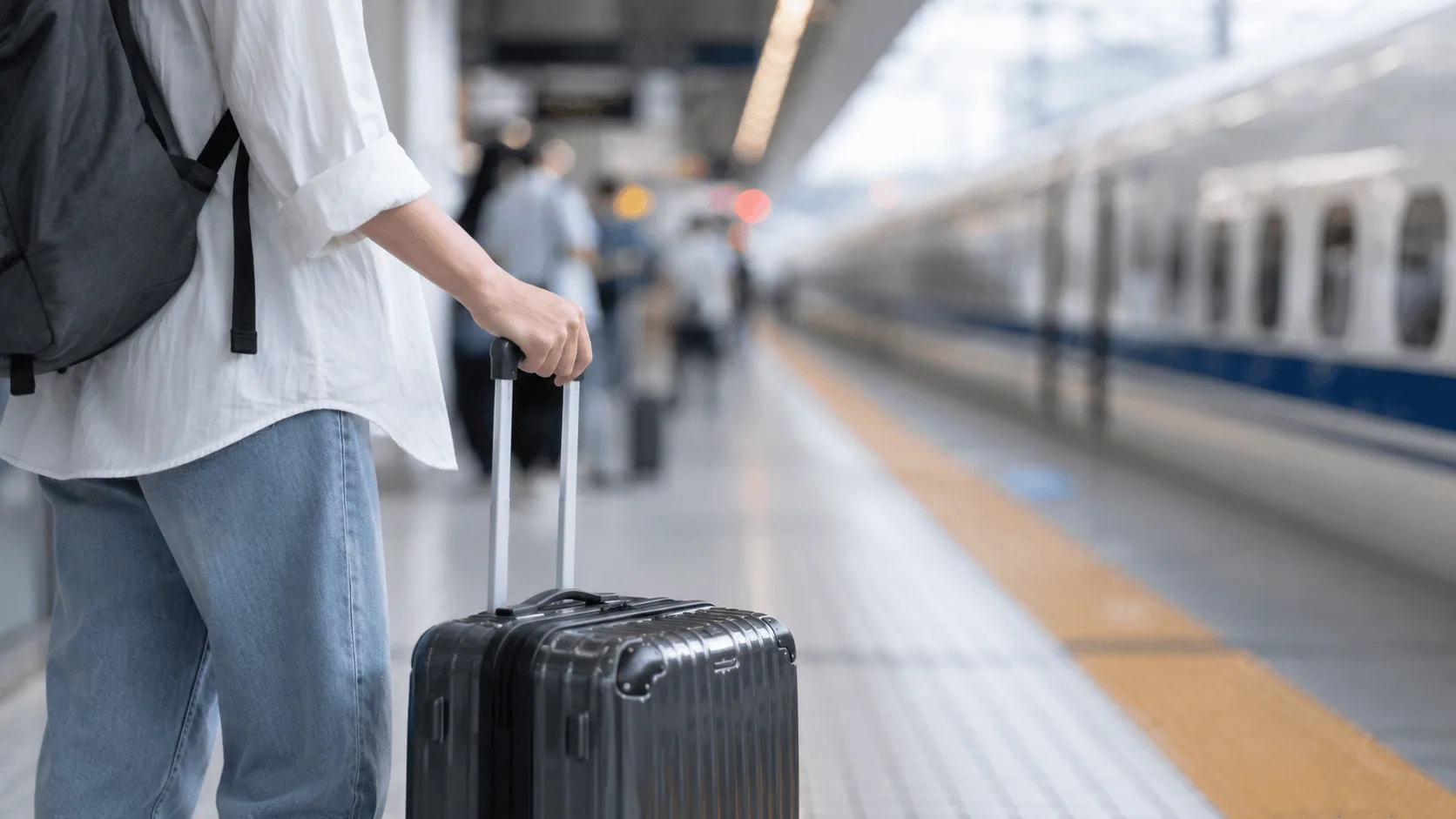
Besides holding it at your feet or on your lap, you can stand it in the space at the end of the car or beside the doors. On the Shinkansen, you can use the luggage space behind the rearmost seats or the vestibule of the car. Be mindful of people passing by so you don’t block the aisle or emergency exits.
Q. Can I use convenience store bins?
Most convenience store bins are meant for trash from items bought at that store. Some stores don’t accept trash brought from elsewhere, so follow the in-store signs and staff guidance. It’s reassuring to assume “take it with you” as the default.
Q. Can I use an onsen if I have a tattoo?
It depends on the facility. Some onsen don’t allow entry with tattoos, while others let you in if you cover them with a sticker, or offer private/in-room baths. Checking with each facility in advance is reassuring.
Summary | Knowing the manners makes your Japan trip even better
Japan has its share of small etiquette points, but you don’t need to memorize them all perfectly. Keep these three in mind—”line up,” “be considerate of those around you,” and “ask staff if you’re unsure”—and you’ll feel at ease in most situations. To enjoy theme parks and exploring town even more comfortably, it also helps to sort out your internet connection and a translation app in advance. Here’s a recap of the key points:
- At theme parks, the rules for selfie sticks, tripods, and bringing food/drink differ by park—check the official sites before you visit
- When lining up, join the back and wait your turn. Be considerate with photos
- On trains, keep calls to a minimum and offer priority seats. On escalators, it’s fine to stand still rather than walk
- Around town, take your trash with you, and smoke only in designated areas. No tipping needed
- Knowing customs like taking your shoes off and how to use an onsen makes the trip even more enjoyable
Rules can change, so it’s reassuring to check each official site for the latest before you set off. Just knowing a little etiquette makes a trip to Japan far more comfortable.
You might also like
※ “Tokyo Disney Resort,” “Tokyo Disneyland,” and “Tokyo DisneySea” are registered trademarks of The Walt Disney Company and its affiliates. “Universal Studios Japan” and “USJ” are registered trademarks of NBCUniversal / USJ LLC. “LEGOLAND®” and “LEGO®” are registered trademarks of the LEGO Group. This site is not an official partner of any of these companies; it is an independent blog created for informational purposes.
※ The images in this article were created using generative AI.
This English article was created with AI translation assistance based on the original Japanese. For rules, customs, and procedures, please always confirm the latest details on the official websites before you go.
🗓️ Before you go, check crowd forecasts on our Tokyo Disneyland / Tokyo DisneySea / USJ / LEGOLAND Japan crowd calendars.
※ Images in this article are AI-generated for illustrative purposes.