
This article was translated and adapted from the original Japanese with the help of AI. We’ve aimed for natural, accurate English, but rules and regulations can change. Please confirm the latest details on the official websites before booking.
※ This article is based on information available as of June 2026. Content may change with legal revisions or policy updates.
Minpaku (short-term vacation rentals in Japan) can be a wonderful way to stay: often cheaper than hotels, and giving you a taste of living like a local. On the other hand, key and check-in mix-ups, illegal listings, and issues like noise or trash that end up bothering neighbors have also been reported time and again.
This guide brings together the kinds of trouble travelers can run into with minpaku in Japan, and the issues around minpaku that have been raised in Japan, drawing on official sources such as the Japan Tourism Agency. It also covers how to spot illegal listings and how to pick a place you can stay in with peace of mind, so you can use it when choosing where to stay. This isn’t a guide against minpaku itself—it’s a friendly heads-up on what’s worth knowing so you can use it well and enjoyably.
- What exactly is minpaku? Japan’s three systems
- Common trouble at minpaku (from the guest’s side)
- The “minpaku problems” being raised in Japan (from the neighborhood’s side)
- Spotting illegal minpaku, and choosing safer ones
- Prefer a hassle-free stay? Licensed hotels & ryokan are another option
- Frequently asked questions (FAQ)
- Summary | Choose well and minpaku are fine—when in doubt, go licensed
What exactly is minpaku? Japan’s three systems
To legally operate a minpaku in Japan (a service that charges travelers to stay in a residential dwelling), a host generally needs to work within one of three systems:
- Private Lodging Business Act (the so-called “Minpaku Law”): requires notification to the prefectural or local government, with a cap of up to 180 operating days per year.
- Hotel Business Act (as a “simple lodging” facility, etc.): operated under a license. There’s no cap on operating days.
- National Strategic Special Zone Minpaku (“Tokku Minpaku”): minpaku operated under municipal approval in certain designated areas.
According to the Japan Tourism Agency, there are tens of thousands of notified minpaku dwellings under the Minpaku Law nationwide (the number varies over time). Properly notified or licensed facilities display a notification number or license, and this is a big clue for telling whether a listing is legal (for details, see the Japan Tourism Agency Minpaku Portal Site).
Common trouble at minpaku (from the guest’s side)
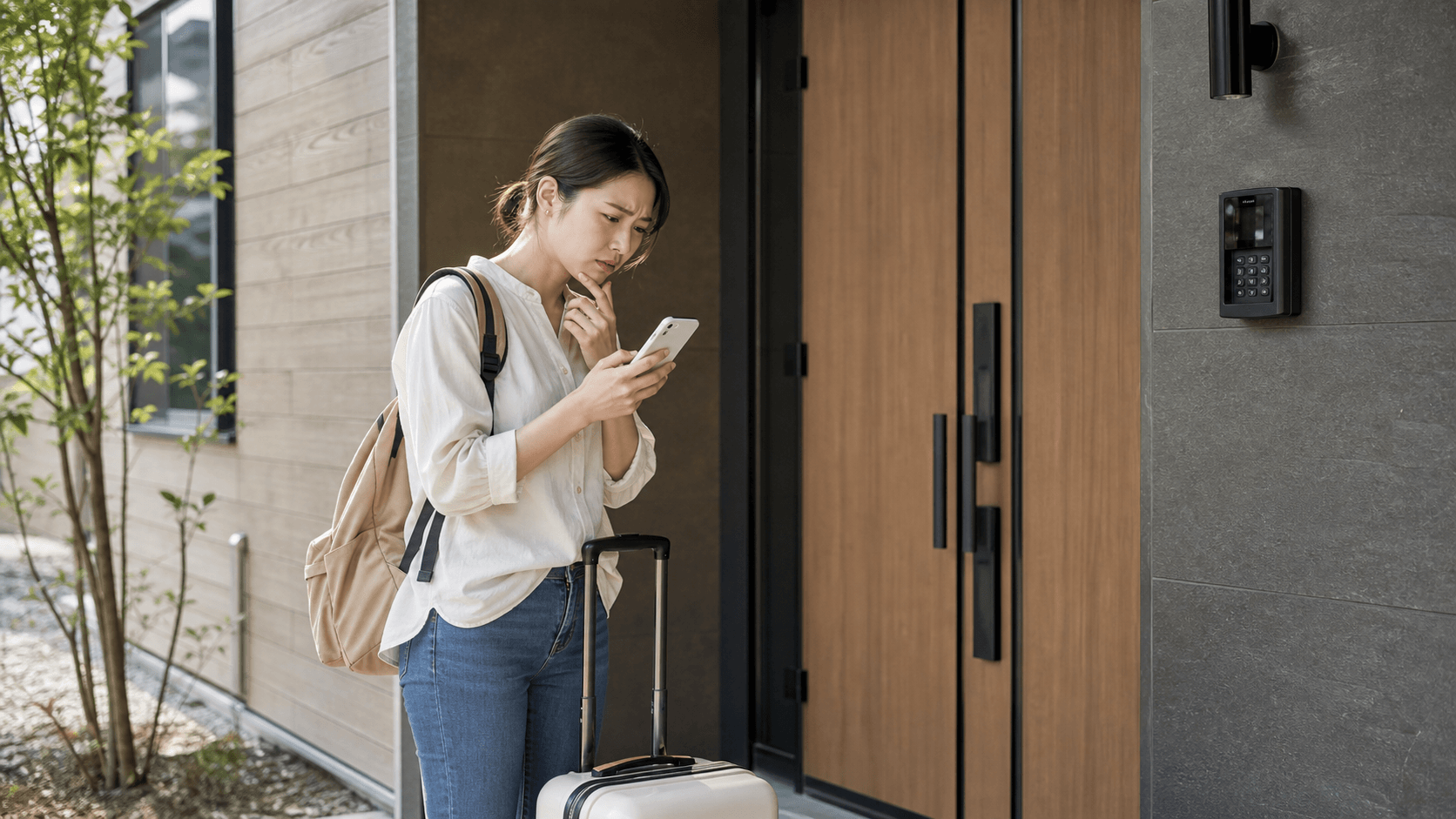
Issues with keys or check-in arrangements
First, the kinds of trouble that people who stay at a minpaku most often run into. Unlike hotels, there’s often no front-desk staff on site, and misunderstandings like these can happen more easily:
- Key and check-in trouble: not knowing where to collect the key, the passcode being wrong, or losing or accidentally taking the physical key home. This is especially common at self check-in minpaku.
- Reservation vs. reality: the room looking different from the photos, cleaning being lacking, or amenities not working.
- Guest count and rule issues: staying with more people than booked is a breach of the terms and can lead to trouble—and in some cases legal issues.
- Not being able to reach the host: not getting a reply when you need help, leading to delays.
- Strict house rules: at minpaku inside apartment buildings, you may need to follow detailed rules for trash disposal, noise, and shared spaces.
- The listing turns out to be illegal: some travelers end up at an unregistered, illegal minpaku and can’t check in at the last minute.
You can head off many of these issues by checking a few things before you book: whether the listing shows a license or notification, the reviews, the check-in method, and how to contact the host.
The “minpaku problems” being raised in Japan (from the neighborhood’s side)
Another side you don’t want to miss is the impact on neighbors and the wider community. This is also worth knowing because a traveler can unintentionally end up being the cause of neighborhood trouble.
- Noise: late-night voices, footsteps, and the sound of suitcase wheels can disrupt neighbors’ daily lives.
- Trash-disposal rule violations: not following sorting rules or the correct pickup day is a major cause of neighborhood friction.
- Manners and safety concerns: residents can feel uneasy about a stream of unfamiliar people coming and going.
Japan Tourism Agency information and news reports commonly cite complaints about noise and trash disposal as typical examples of minpaku-related friction with neighbors. Cases of illegal operators being cracked down on since the Minpaku Law took effect have also been reported, and authorities are working to police problematic operators and reduce illegal listings on platforms. Since rules and enforcement can change, please check the Japan Tourism Agency and local government websites for the latest details.
In short, authorities are working to reduce minpaku that cause trouble or operate illegally. For travelers too, choosing properly registered places and following house/neighborhood rules means both peace of mind for you and consideration for the community.
Spotting illegal minpaku, and choosing safer ones
To use minpaku with confidence, check these points before you book:
- Check the license or notification number: does the booking site or listing page show a “Hotel Business Act license” or “Private Lodging Business notification number”? Listings with no such display, or vague information, are best avoided.
- Read the reviews: look at real guest reviews for cleaning quality, host communication, and how strict the neighborhood rules are.
- Check-in method and contact channel: is the way you’ll get the key, and how to reach the host (app or phone), clearly laid out?
- Use established booking sites: booking through a major platform often means you can get support if something goes wrong.
- Look for clear house rules: listings that spell out trash disposal, noise, and guest-count rules in detail tend to be run more carefully.
Prefer a hassle-free stay? Licensed hotels & ryokan are another option
If you feel less confident with the language or the process—or if you’re traveling with young children and want a guaranteed rest—picking a licensed hotel or ryokan (traditional inn) is another reassuring choice. You get front-desk support, fewer worries about check-in or neighborhood rules, and less risk of trouble.
SPONSORED | Stays & experiences in one place
Book stays & experiences on KKday
Beyond just a room, KKday lets you line up licensed stays alongside tours, tickets, and transfers—handy for planning your Japan trip in one place.
Multilingual booking platforms can also be handy when looking for hotels in Japan.
SPONSORED | Multilingual hotel booking
Book Japan hotels on Agoda
A multilingual hotel booking platform popular across Asia. Filter by area and dates, and compare with guest reviews—reassuring even for a first trip to Japan.
Frequently asked questions (FAQ)
Q. Are minpaku dangerous? Should I avoid them?
A. Not necessarily. Properly notified or licensed minpaku are a convenient and appealing option. The problem is mainly “illegal minpaku” and use that ignores the rules. Choose the right listing, mind your manners, and you can use them with peace of mind.
Q. How do I tell if a minpaku is illegal?
A. Check whether the booking site or listing page shows a “Hotel Business Act license” or “Private Lodging Business notification number.” It’s best to avoid listings with no such display or vague information.
Q. What should I keep in mind so I don’t disturb the neighbors?
A. Especially watch out for noise (particularly at night) and trash disposal rules. Follow the property’s house rules, sort trash and put it out on the correct day, and keep things quiet at night. Small courtesies go a long way.
Q. If I’m worried about trouble, what’s a good choice?
A. Hotels and ryokan with front-desk support are easier for check-in and handling issues. If you feel less confident with the language or booking process, going with a licensed hotel is a reassuring option.
Consider official accommodation options as well
Summary | Choose well and minpaku are fine—when in doubt, go licensed
Here’s a recap of where things stand with minpaku in Japan:
- Minpaku operate under systems like the Minpaku Law (180-day annual cap, notification-based)
- As a guest, watch out for trouble with keys, reservation details, host contact, and neighborhood rules
- In Japan, noise and trash impact on neighbors are seen as issues, and enforcement against problematic operators is being stepped up
- The biggest way to avoid illegal minpaku is checking the license or notification number
- If you’re unsure, licensed hotels and ryokan are also a reassuring choice
Once you know the rules and the manners, minpaku can be an enjoyable way to stay. Balance peace of mind for yourself with consideration for the community, and have a great trip to Japan.
※ The images in this article were created using generative AI.
※ This article is based on information available as of June 2026. Content may change with legal revisions or policy updates. For the latest, please check the Japan Tourism Agency and local government websites.
This English article was created with AI translation assistance based on the original Japanese. For rules, procedures, and any specific listing, please always confirm the latest details on the official websites before you book.