

SPONSORED | This page contains affiliate promotions.
Have you ever been approached at a Japanese airport or train station with “Need a taxi?” or “Cheap ride!”? Even when it sounds friendly, some of those cars are unlicensed shirotaku (illegal taxis) operating without permits.
Shirotaku come with real risks—inflated fares and inadequate accident coverage—and recent cases targeting international visitors have drawn attention. The good news: knowing a few key points makes them easy to avoid.
Here’s what you’ll get from this guide to travel safely:
- What a shirotaku is and why it’s illegal
- How they target visitors and the real harms reported
- How to tell legitimate taxis apart from shirotaku
- Safer alternatives that keep you clear of shirotaku
- Where to get help if trouble happens
Check this before your trip to avoid the “I didn’t know” trap.
- What is a shirotaku, and why is it illegal?
- How shirotaku target visitors, and the real harms reported
- How to tell a legitimate taxi from a shirotaku
- Safer alternatives that keep you clear of shirotaku
- If you run into trouble with a shirotaku
- Frequently asked questions (FAQ)
- Summary | Choose licensed options and shirotaku are easy to avoid
What is a shirotaku, and why is it illegal?
A shirotaku is an unlicensed taxi—someone using a private vehicle to carry passengers for a fee without national authorization. In Japan, Article 4 of the Road Transportation Act requires a permit from the Minister of Land, Infrastructure, Transport and Tourism to run a “general passenger vehicle transport business,” meaning to carry passengers for hire like a taxi.
Operating without this permit is a violation of the Road Transportation Act, and news reports and legal explanations describe substantial statutory penalties including imprisonment or fines. Because penalty amounts and provisions can be revised, please check MLIT for the current statutory penalties. The name “shirotaku” comes from the white license plates used on private cars in Japan (as opposed to the green plates used on licensed taxis).
In short, a shirotaku isn’t a “slightly cheaper taxi”—it’s illegal unlicensed operation. Passengers can also be pulled into problems, so avoiding them is the basic rule.
How shirotaku target visitors, and the real harms reported
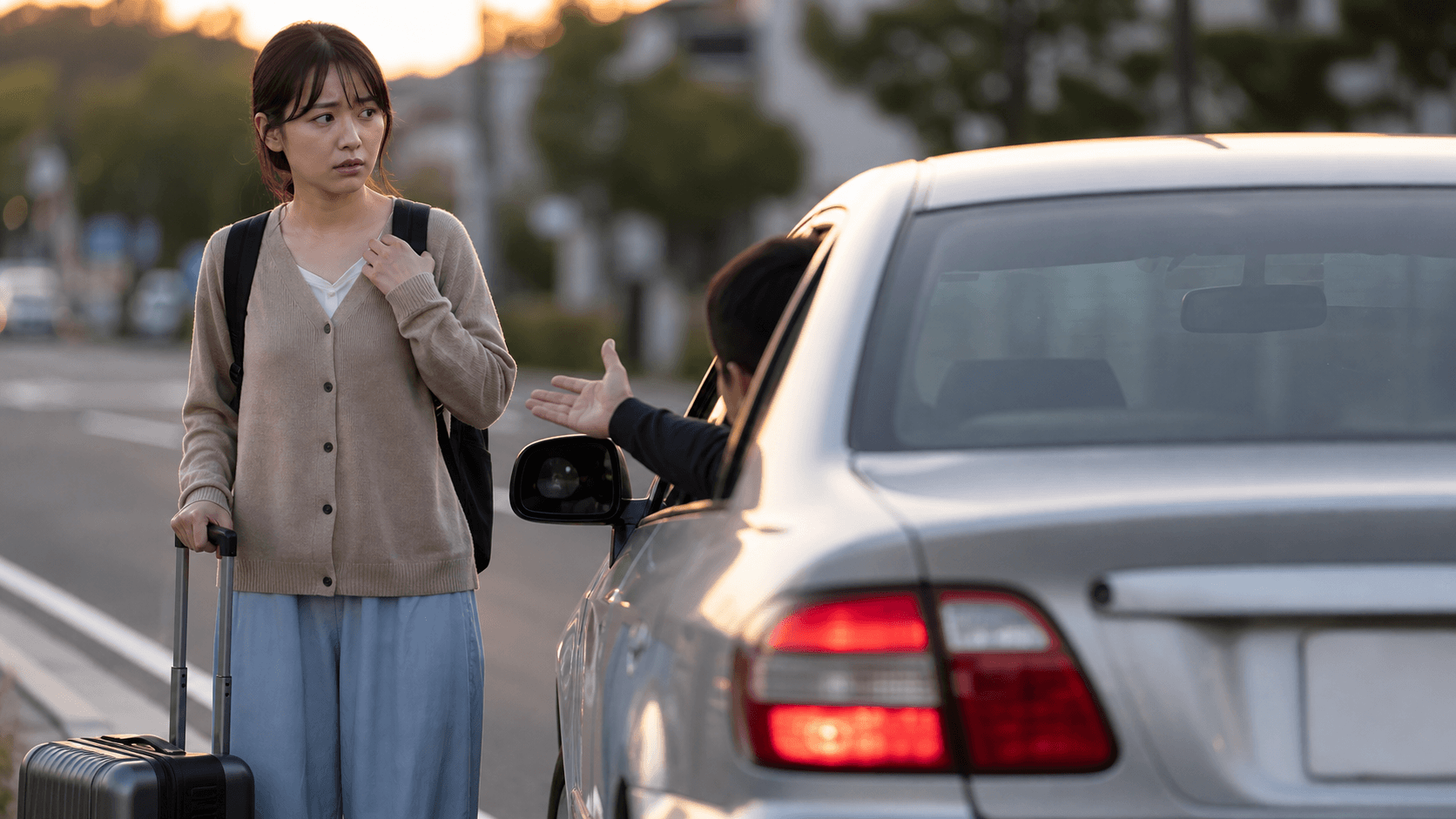
Inflated fares and no accident coverage—real risks.
Enforcement against shirotaku has surged in recent years. According to news reports (Kyodo News and others), the 2025 total was a record high, roughly ten times the 2021 level. Some reports also note that drivers cited in enforcement actions included a notable share of non-Japanese nationals, and cases involving international visitors have grown more visible.
Common patterns include:
- Pre-arranged via social media or apps before arrival in Japan
- Direct approach at airports, major stations, or tourist areas
Specific risks include:
- Inflated fares: no meter, and much higher amounts demanded after the ride than the market rate.
- Inadequate accident coverage: private-car insurance is not designed for commercial passenger transport, so a passenger may not be fully covered in a crash.
- Safety concerns: drivers may not hold the Class-II license required for taxi work, and vehicles may not meet the maintenance standards required for commercial use.
- Nowhere to turn for complaints: without a proper business entity, there’s no clear channel for handling disputes.
The friendly-sounding “cheap ride” pitch can hide these very real risks.
How to tell a legitimate taxi from a shirotaku
Several visible clues make the difference:
| Check point | Legitimate taxi | Shirotaku (caution) |
|---|---|---|
| License plate | Green (black for kei cars) = commercial | White or yellow = private plate |
| Fare meter | Meter visible in the car | No meter; verbal high-price offer |
| Markings | Company name, roof sign (andon), driver ID | No company markings, no visible driver ID |
| How you get in | Taxi stand, hailed on street, or licensed dispatch app | Approaches you at airport or station (tout) |
The easiest tell is the license plate color. Licensed taxis have green plates (kei-car taxis have black). If a car with a white or yellow plate is picking up paying passengers, it’s almost certainly a shirotaku.
Legitimate taxis are boarded via a taxi stand, hailed on the street, or dispatched by app. If someone approaches you at the arrivals lobby or in front of the station, be careful. Licensed dispatch apps in Japan include GO, Uber Taxi, DiDi, and S.RIDE. Note that in Japan, the Uber app’s “Uber Taxi” service dispatches partnered legitimate taxis—not private ride-share as in some other countries.
Safer alternatives that keep you clear of shirotaku
The best approach is to choose licensed options from the start:
- Take a taxi from a legitimate taxi stand (check for the green plate and meter)
- Use a licensed dispatch app (GO, Uber Taxi, DiDi, S.RIDE, etc.)
- Use rail or airport limousine buses and other public transit
- Pre-book a licensed airport transfer or hire car
Especially recommended for:
- Late-night arrivals
- Traveling with young children
- Traveling with elderly companions
- First-time visitors to Japan
Right after arrival at the airport is when tout approaches happen most. When you have heavy luggage, small children, or a late arrival and need to move quickly, planning your stays, transfers, and activities before you go helps you skip the touts and start your trip with peace of mind.
SPONSORED | Stays & experiences in one place
Book stays & experiences on KKday
Beyond just a room, KKday lets you line up licensed stays alongside tours, tickets, and transfers—handy for planning your Japan trip in one place, so arrival goes smoothly without relying on street touts.
To use a licensed dispatch app on the street, mobile data is essential too. A hotel booked in advance also gives you a confirmed destination when arriving at night, so drivers can drop you straight there.
SPONSORED | Multilingual hotel booking
Book Japan hotels on Agoda
A multilingual hotel booking platform popular across Asia. Filter by area and dates, and compare with guest reviews—reassuring even for a first trip to Japan.
If you run into trouble with a shirotaku
If something goes wrong, here are the channels to contact:
- Fare or contract disputes: the Consumer Hotline 188 (Consumer Affairs Agency) can help.
- Crime, accident, or safety concerns: call the police at 110. In case of an accident, call from the scene.
- Keep evidence: license plate number, driver description, amount paid, and screenshots of the exchange all help.
If something feels off, it’s okay to walk away without paying and switch to a licensed option—that’s often the smart move.
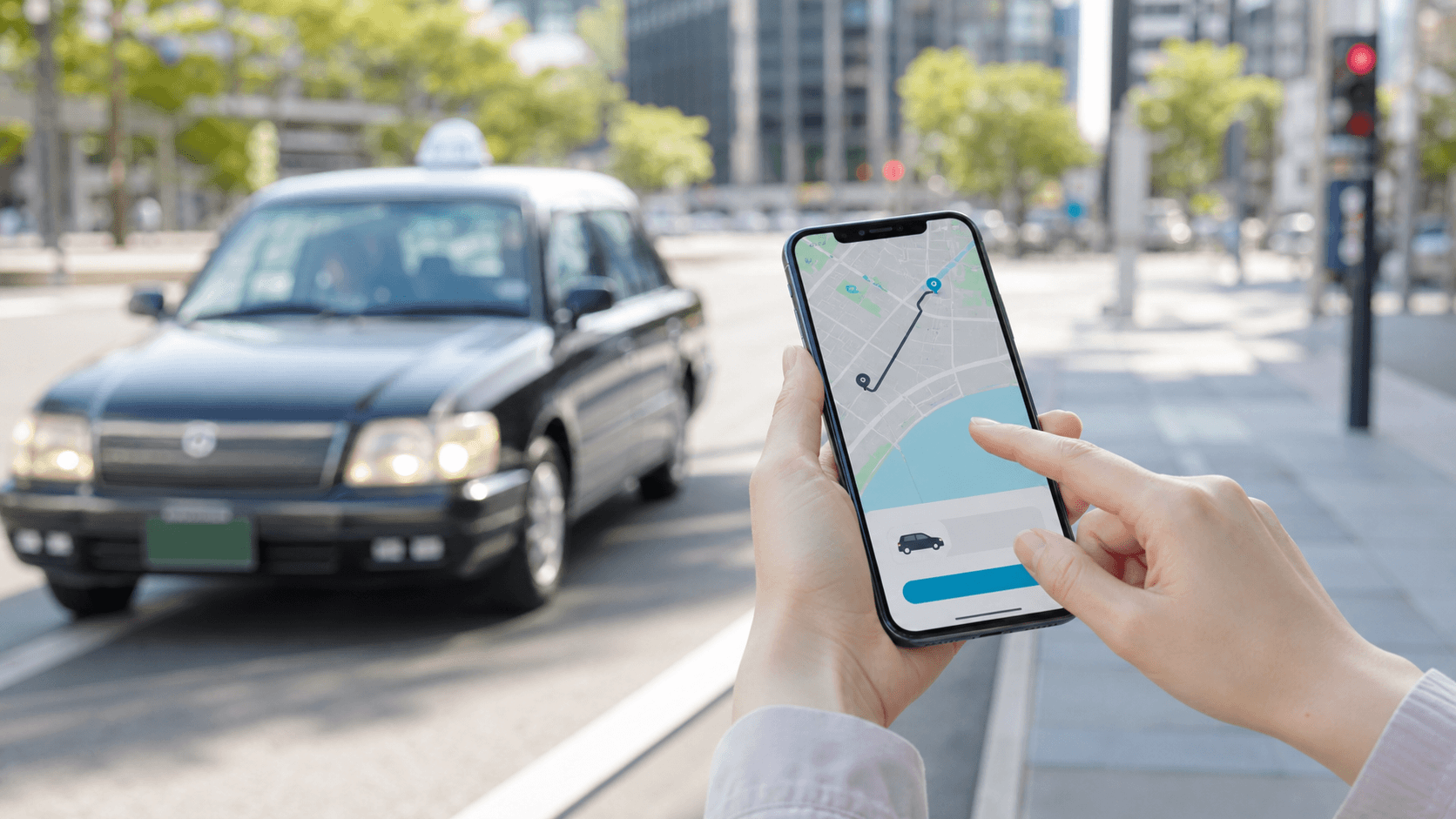
Book a licensed taxi via a dispatch app for peace of mind.
Frequently asked questions (FAQ)
Q. Why are shirotaku dangerous?
A. Beyond the risk of inflated fares, private-car insurance may not adequately cover commercial passenger transport in an accident. There’s no way to verify the driver’s Class-II license or the vehicle’s maintenance, and there’s no clear channel for handling disputes.
Q. How do I recognize a legitimate taxi?
A. Look for a green license plate (black for kei cars), a fare meter, a company name displayed on the vehicle, and a visible driver ID. Be cautious of anyone approaching (“touting”) at airports or stations.
Q. Are dispatch apps safe?
A. Yes. Licensed apps like GO, Uber Taxi, DiDi, and S.RIDE dispatch registered legitimate taxis. Fare and driver information appears in the app, giving you far more assurance than a random tout.
Q. What’s the safest way to get from the airport?
A. Use the legitimate taxi stand, rail service, or airport limousine bus. You can also pre-book a licensed airport transfer or hire car, which is especially useful for late arrivals or when traveling with children.
Summary | Choose licensed options and shirotaku are easy to avoid
Shirotaku might look “cheap,” but the risk of fare disputes and inadequate accident coverage is real—it’s illegal unlicensed operation. Key takeaways:
- Licensed taxis have green plates + a meter + company markings
- Beware of touts approaching at airports or stations
- Move with licensed taxi stands, dispatch apps, public transit, or pre-booked licensed transfers
- For trouble, contact Consumer Hotline 188 or the police at 110, keeping evidence
A little knowledge makes shirotaku trouble much easier to avoid. Enjoy safe, smooth travel in Japan.
Related reading: Japan Minpaku Guide: Trouble, Illegal Listings & Safe Choices
Latest information (official sources):
- Ministry of Land, Infrastructure, Transport and Tourism (MLIT)
- Consumer Affairs Agency (CAA)
- National Police Agency (NPA)
※ The images in this article were created using generative AI.
※ This article is general awareness content based on public information and news reports as of June 2026. Not intended to defame any specific individual or business. Laws, regulations, and penalties may be revised. For accurate and current information, consult MLIT, the National Police Agency, and the Consumer Affairs Agency official sources. Service names and app names are trademarks or registered trademarks of their respective owners.
This English article was created with AI translation assistance based on the original Japanese. For rules, procedures, and any specific situation, please always confirm the latest details on the official government sources before you act.